Pilgrimage Travel from the USA: A Complete Booking Guide
How to book pilgrimage travel from the USA for Hajj and Umrah, Char Dham Yatra, Vatican and Rome, and the Camino de Santiago — group flights, visa handling, timing, and documentation.
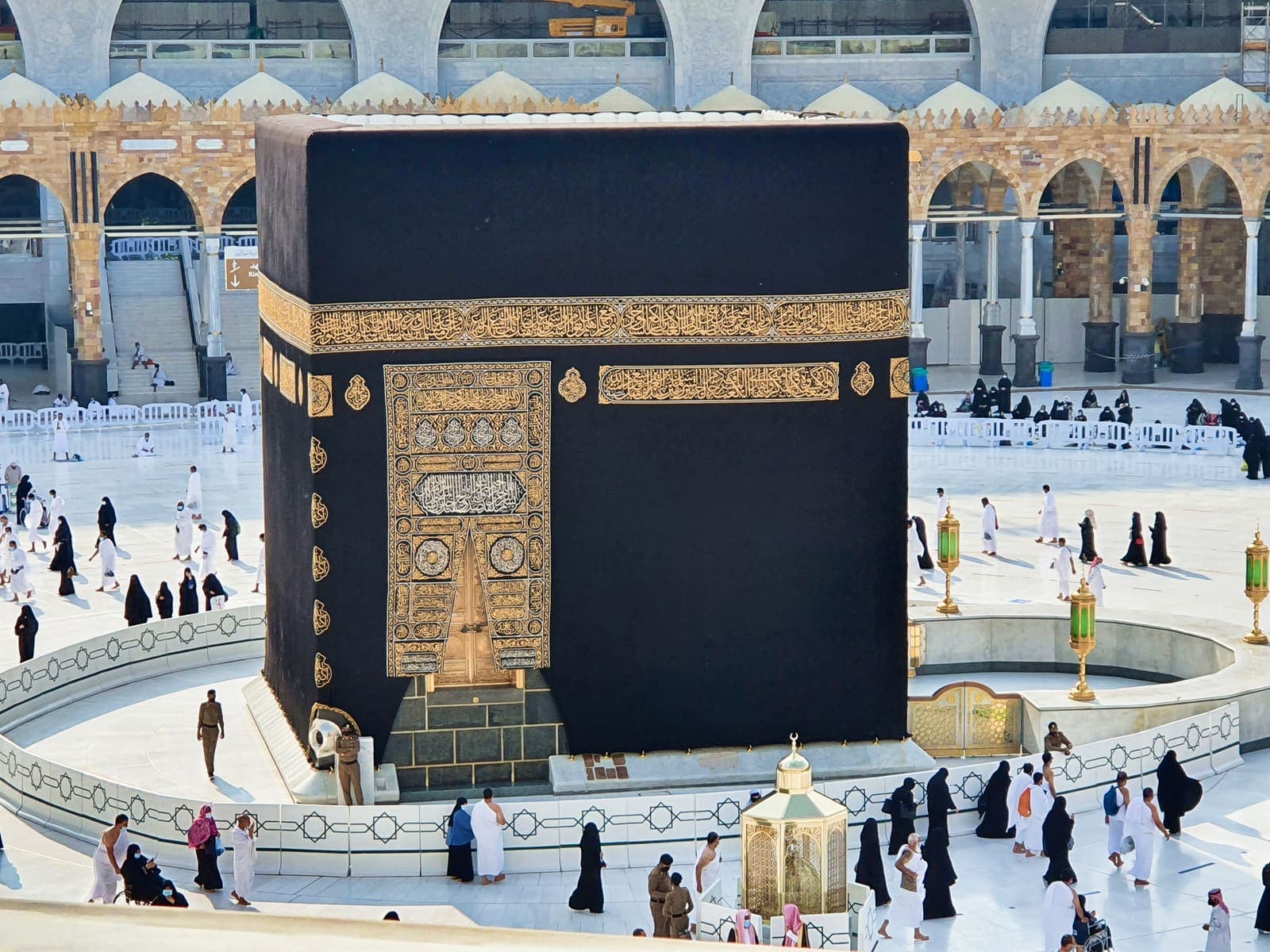
Photo: Richard Mortel, Wikimedia Commons, CC BY 2.0
Pilgrimage Travel from the USA: A Complete Booking Guide
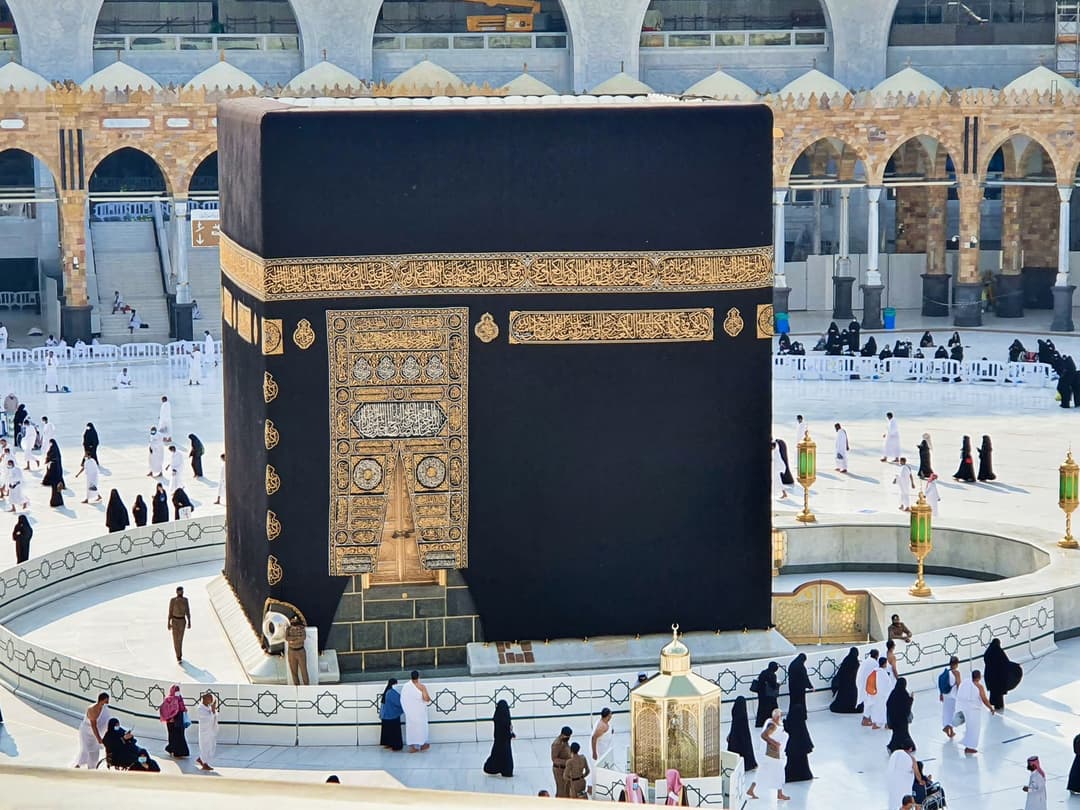 Masjid al-Haram, Mecca. Photo: Richard Mortel, Wikimedia Commons (CC BY 2.0).
Key Takeaways
- Pilgrimage travel books differently from a vacation: Hajj and Umrah run through Saudi Arabia's official Nusuk platform, not a general travel agent, and most other circuits reward group or block booking over individual tickets (haj.gov.sa).
- Scale is real: Saudi Arabia recorded 1,707,301 Hajj pilgrims in 2026, and the Vatican's 2025 Jubilee Year drew more than 33 million visitors to Rome, with the USA supplying the second-largest national share after Italy (GASTAT; USCCB).
- Every major circuit has its own registration system: Nusuk for Hajj/Umrah, an Aadhaar-linked e-pass for Char Dham Yatra, and a Compostela credential for the Camino de Santiago — missing the right one can stop a trip before it starts.
- Health and safety guidance is circuit-specific and changes year to year: meningococcal vaccination is required for Hajj/Umrah, and altitude sickness is a real, documented risk on the Char Dham route.
- An ARC-accredited agency with group escort experience handles the visa, manifest, and documentation work that individual travelers most often get wrong on these trips.
Pilgrimage travel is one of the largest and least well-documented categories of international travel booked from the USA. It doesn't behave like a vacation booking: fares spike around fixed religious calendars, several destinations require a government-run registration system before an airline ticket is even useful, and getting one document wrong can mean turning back at the airport. This guide covers how booking actually works for the four circuits Americans travel for most — Hajj and Umrah, Char Dham Yatra, the Vatican and Rome, and the Camino de Santiago — and what changes when you're traveling as part of a religious group rather than alone.
Table of Contents
- How Pilgrimage Booking Differs From a Vacation
- Hajj and Umrah: Booking Through Nusuk
- Char Dham Yatra: Registration and Timing
- Vatican and Rome: Planning Around the Jubilee Calendar
- The Camino de Santiago: Credentials, Not Tickets
- Health and Documentation Basics Across Every Circuit
- What Changes When You Book as a Group
- Frequently Asked Questions
How Pilgrimage Booking Differs From a Vacation
Pilgrimage travel runs on a fixed religious calendar, not a flexible vacation window, and that changes both when you book and who you book through. Several circuits require a government or institutional registration step that has nothing to do with your airline ticket — book Hajj or Umrah without going through Saudi Arabia's Nusuk platform, and no flight booking fixes that gap (haj.gov.sa). Char Dham Yatra requires a separate, mandatory e-registration through the Uttarakhand state government before pilgrims can pass checkpoints, regardless of how the flight to India was booked.
The volumes involved are also larger than most travelers expect. Saudi Arabia recorded 1,707,301 total Hajj pilgrims in 2026, with 1,546,655 arriving internationally — the overwhelming majority (1,485,729) by air (GASTAT, May 2026). The Vatican's 2025 Jubilee Holy Year drew more than 33 million pilgrims from 185 countries to Rome, at a pace of roughly 90,000 a day, with the United States supplying 12.57% of visitors — the second-largest national share after Italy's 36.34% (USCCB, Jan 2026). That scale is exactly why block and group bookings exist for pilgrimage travel: airlines and hotels plan capacity around these predictable surges, and a group booking secures a share of it ahead of the crowd.
Hajj and Umrah: Booking Through Nusuk
Hajj and Umrah bookings for US travelers run entirely through Nusuk, the Saudi Ministry of Hajj and Umrah's official platform — it is the only approved channel for Hajj visas, package booking, and permits, and performing Hajj on a tourist or other non-Hajj visa is not permitted (haj.gov.sa). US pilgrims cannot apply for a Hajj visa directly at a Saudi embassy or consulate; bookings must go through a Nusuk-registered provider (U.S. Embassy Saudi Arabia).
Umrah has its own separate visa track, and it changed materially in 2025 and 2026. Saudi Arabia introduced a multiple-entry Umrah visa valid for 365 days from issue, with a cumulative stay of up to 90 days across all entries (it cannot be used to enter during the Hajj season itself) (Saudi Press Agency, Jul 2026). Since June 10, 2025, a "No Booking, No Visa" rule has also been in effect: no Umrah visa is issued without a documented hotel booking logged in the Nusuk Masar system, with no country exemptions (Gulf News, 2025).
Health requirements are specific and worth getting right before you travel: the CDC's Yellow Book states that all pilgrims aged 1 and older must show proof of quadrivalent (ACWY) meningococcal vaccination, given 10 days to 3–5 years before arrival depending on the vaccine type (CDC Yellow Book, reviewed Apr 2026). Polio vaccination is required only for pilgrims arriving from countries with active polio transmission — it is not a general requirement for travelers departing from the USA (CDC Yellow Book, 2026). The CDC has also flagged meningococcal disease cases linked to pilgrimage travel, underscoring why the vaccination requirement is enforced rather than a formality (CIDRAP).
We cover the full visa mechanics, flight routes, and health checklist for this circuit in detail in our Hajj and Umrah travel guide.
A note on current travel conditions: the US State Department's advisory for Saudi Arabia has fluctuated with regional conditions and stood at Level 3, "Reconsider Travel," in 2026. Advisory levels change with conditions on the ground — check the current advisory directly before booking, and ask your booking agent what contingency options exist if conditions shift close to departure.
Char Dham Yatra: Registration and Timing
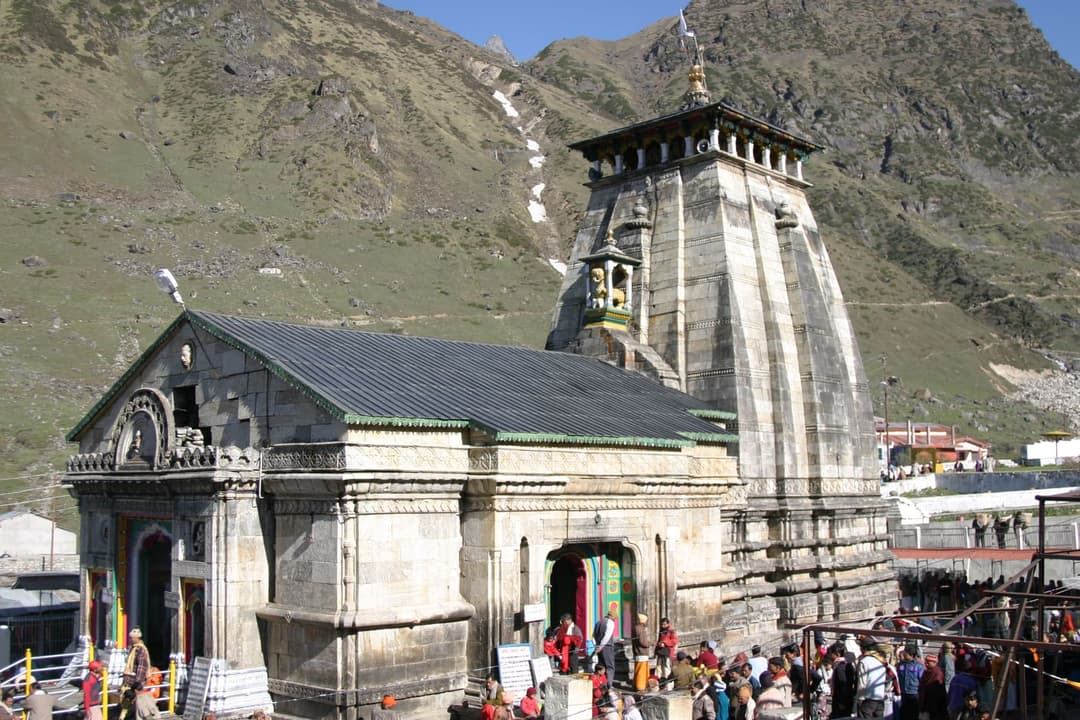 Kedarnath Temple, Uttarakhand. Public domain, Wikimedia Commons.
Char Dham Yatra — the Hindu pilgrimage circuit to Yamunotri, Gangotri, Kedarnath, and Badrinath in Uttarakhand, India — runs on a strict seasonal window because the Himalayan winter closes the route entirely. The 2026 season opened April 19 for Yamunotri and Gangotri, and April 22–23 for Kedarnath and Badrinath (eUttaranchal); closing dates shift annually with the Hindu lunar calendar, so confirm the current year's dates before booking rather than assuming a fixed date.
Registration is mandatory and separate from any flight or hotel booking: every pilgrim, Indian or foreign, must register through the official Aadhaar-linked portal and carry a QR-coded e-pass to pass checkpoints along the route (Uttarakhand Tourist Care registration portal; eUttaranchal). In the 2025 season, more than one million pilgrims visited the four shrines in just the first 20 days after opening (Prasar Bharati/News on Air, May 2025) — a volume that makes early registration and booking a practical necessity, not just a formality.
Altitude is the other planning variable most general travel advice skips. Yamunotri sits at 3,293 meters, officially confirmed by the Shri Badrinath-Kedarnath Temple Committee (BKTC); Kedarnath sits at roughly 3,583 meters, with Badrinath and Gangotri both in the range of 3,050–3,150 meters depending on the source. Uttarakhand's government issues a pre-yatra health advisory in multiple languages urging cardiac checkups and gradual acclimatization, and screening posts along the route check blood pressure, blood sugar, and oxygen levels (India TV News, citing Uttarakhand Health Department, 2025). This isn't a theoretical risk: state disaster-management data recorded 246 pilgrim deaths from health-related causes during the 2024 season, most attributed to cardiac arrest and high-altitude sickness (PTC News; Drishti IAS).
For US-based travelers, the added variable is jet lag compounding altitude adjustment on top of a long-haul flight — something none of the standard India-side planning guides address. Our dedicated Char Dham guide covers the full US-gateway routing, registration steps, and altitude-preparation timeline.
Vatican and Rome: Planning Around the Jubilee Calendar
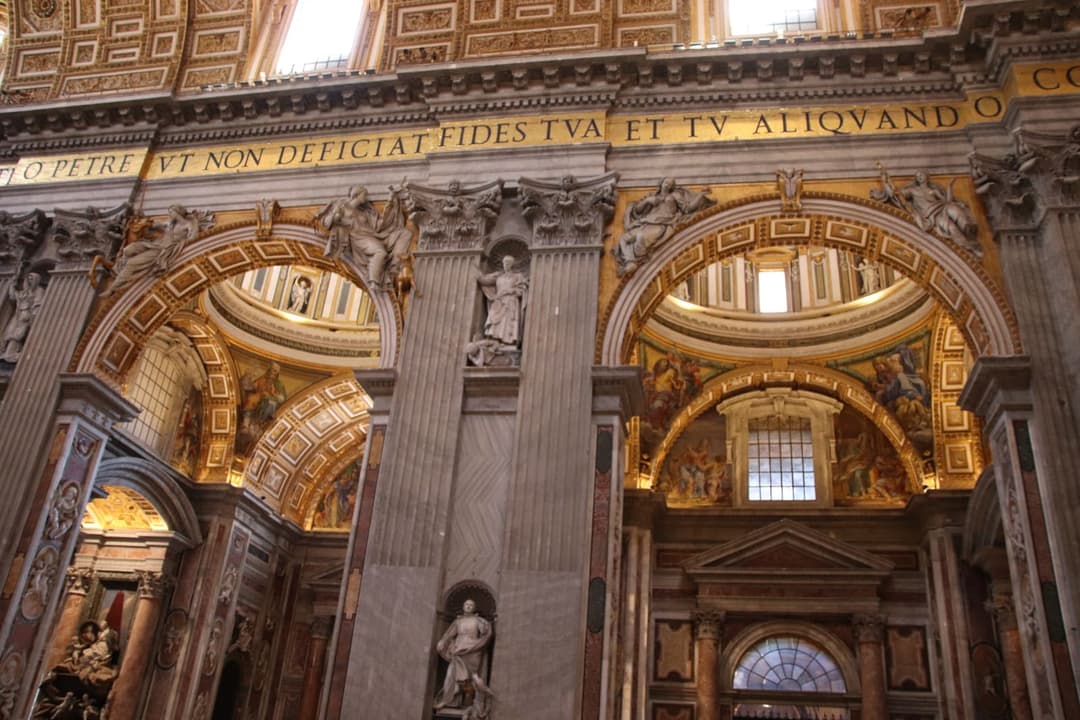 St. Peter's Basilica, Vatican City. Public domain, Wikimedia Commons.
Catholic pilgrimage to Rome moves in cycles tied to Jubilee (Holy) Years, which the Vatican observes roughly every 25 years, alongside a steady baseline of pilgrim traffic in ordinary years. The 2025 Jubilee alone drew over 33 million pilgrims from 185 countries, with more than 545,000 passing through St. Peter's Holy Door in just the first two weeks after it opened (Holy See, Jubilee 2025 communications, Jan 2025). US travelers made up the second-largest national group of visitors, behind only Italy itself (USCCB).
Booking around a Jubilee-scale event means accepting that hotel and flight capacity in Rome tightens well ahead of major liturgical dates — group and block bookings secured months in advance fare far better than individual last-minute tickets during peak Jubilee periods. Outside of a declared Jubilee Year, Rome's pilgrimage infrastructure (basilica access, audience tickets, diocesan group registration) still rewards advance group coordination over solo planning, particularly for parish or diocesan groups traveling together.
The Camino de Santiago: Credentials, Not Tickets
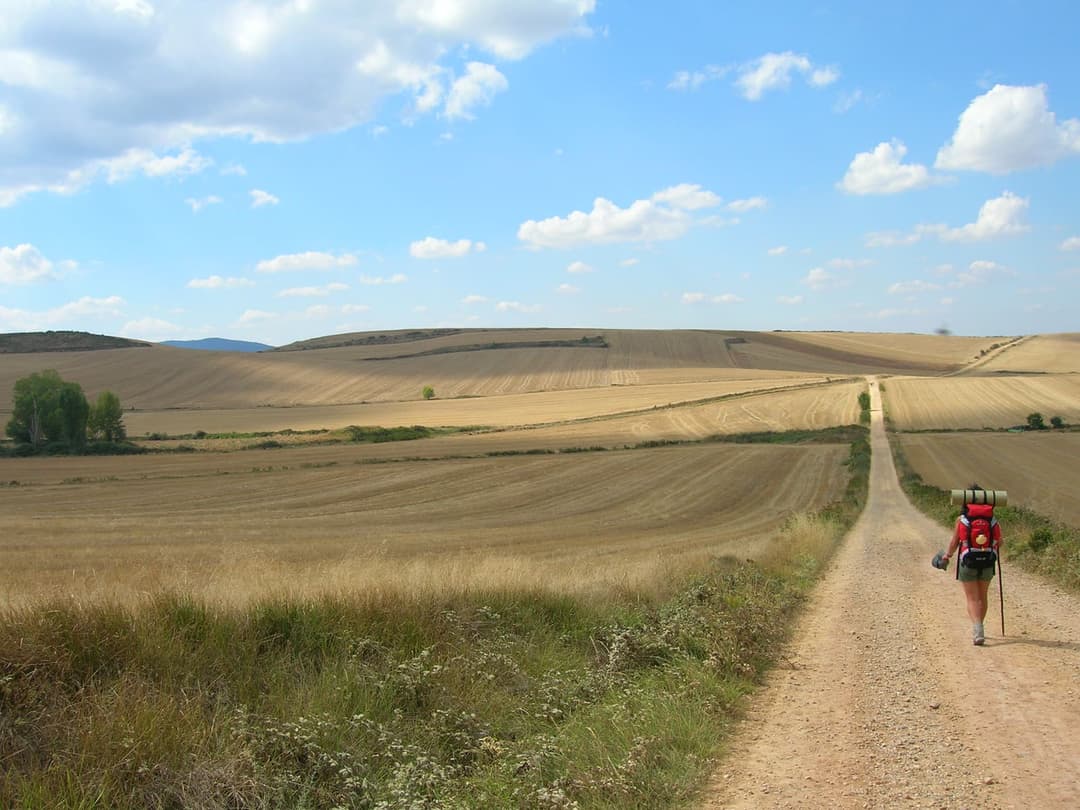 The Camino de Santiago route through Castile and León. Photo: José Antonio Gil Martínez, Wikimedia Commons (CC BY 2.0).
The Camino de Santiago works differently from the other three circuits: there's no visa or entry-registration system, but there is a credential system that determines whether your walk counts as an official pilgrimage. The Pilgrim's Reception Office in Santiago issued 530,919 Compostela certificates in 2025, up 6% year over year, and Americans made up 8% of all pilgrims — the second-largest nationality after Spain's 42% (American Pilgrims on the Camino, citing Pilgrim's Office data). The US chapter itself logged 13,997 credential requests in 2025, up 14% year over year.
Because there's no fixed calendar deadline, most US pilgrims book flights into Spain or France well ahead of their walking dates and treat the credential (the pilgrim's passport, stamped along the route) as the only "registration" that matters. The main planning variable is choosing a starting point that fits the time available — the French Way from Saint-Jean-Pied-de-Port is the most-walked route, but shorter starting points exist for travelers with less time.
Health and Documentation Basics Across Every Circuit
A few requirements come up on nearly every pilgrimage route, and they're the ones most likely to get overlooked in general trip planning:
- Vaccination records travel with you. Hajj and Umrah require documented meningococcal vaccination; other destinations may have their own entry-health rules that change with disease conditions. Keep a physical and digital copy of your vaccination record.
- Registration platforms are not optional add-ons. Nusuk for Hajj/Umrah and the Uttarakhand e-pass for Char Dham are legal requirements to access the site, not travel-agency upsells — confirm your booking includes them, don't assume a flight ticket covers it.
- Passport validity matters more on pilgrimage routes. Group visas and permits are often processed against a specific passport expiration window; renew well ahead of a pilgrimage booking rather than at the last minute.
- Travel insurance should match the specific risk. Altitude-related evacuation coverage matters for Char Dham; a policy that covers trip disruption from advisory-level changes matters for any Middle East itinerary.
What Changes When You Book as a Group
Pilgrimage travel is disproportionately group travel — parish groups, mosque congregations, temple committees, and extended families traveling together — and group booking mechanics solve problems individual bookings can't. A block of seats held on deposit avoids the scenario where half a congregation's fares rise while the other half is still confirming attendance. A single manifest keeps a group together on connecting flights instead of scattered across a cabin. And a Nusuk-licensed or otherwise properly accredited group organizer handles the visa and registration paperwork that trips up individual travelers most often.
Voldeluxe books group and pilgrimage travel — Hajj, Umrah, Char Dham, and Vatican departures explicitly among them — with visa handling, group escort, and on-ground coordination, as an ARC-accredited agency that settles tickets in-house. See our group travel desk for how deposit-held group fares work in practice, and our complete guide to booking international flights for the fare and documentation basics that apply before you even reach pilgrimage-specific requirements.
Frequently Asked Questions
Can I book a Hajj visa myself without going through a travel agency?
No. US pilgrims cannot apply for a Hajj visa directly at a Saudi embassy or consulate — bookings must go through Nusuk, the official Saudi Ministry of Hajj and Umrah platform, via a Nusuk-registered provider (U.S. Embassy Saudi Arabia; haj.gov.sa).
How far in advance should I register for Char Dham Yatra?
As early as the registration portal opens for the season — in 2026, online registration opened March 6, well ahead of the April travel season, and the shrines saw over a million visitors in just the first 20 days of the prior year's season (eUttaranchal; News on Air). Registering early also gives more flexibility on flight and hotel timing around the peak.
Do I need a special visa for the Camino de Santiago?
No visa is required beyond standard Spain/Schengen entry requirements for US travelers; the only "registration" is the pilgrim's credential, which you carry and get stamped along the route to qualify for a Compostela certificate at the end (American Pilgrims on the Camino).
Is pilgrimage travel more expensive during peak religious seasons?
Fares and hotel rates do rise around fixed peak periods — Hajj season, Diwali-season Char Dham travel, and major Jubilee dates in Rome — because demand is concentrated and predictable. Booking through a group or block arrangement, and booking well ahead of the peak window, are the most reliable ways to manage that cost, though we could not verify a specific fare-increase percentage from a primary source strong enough to publish as a hard figure.
What's the biggest documentation mistake pilgrimage travelers make?
Assuming a confirmed flight booking is sufficient. Hajj, Umrah, and Char Dham Yatra each require a separate government or institutional registration step — Nusuk for the former two, the Uttarakhand e-pass for the latter — that has to be completed independently of the airline ticket.
Continue Learning
- Hajj and Umrah travel from the USA: group flights, visa & documentation
- Char Dham Yatra from the USA: flights, group booking & timing
- How to book international flights from the USA in 2026
- Group travel, 12 to 400 travelers
- Talk to the group and pilgrimage desk
About the author: Srikanth Borra is a Senior International Travel Consultant at Voldeluxe with nine years of experience booking long-haul itineraries across 600+ airline partners, including group and pilgrimage travel with visa handling and on-ground coordination.
Published September 13, 2026. Visa rules, registration requirements, and travel advisories for pilgrimage destinations change frequently — confirm current requirements directly with the relevant official platform (Nusuk, Uttarakhand's registration portal, or the Vatican) before booking.
Ready to price your trip?
Tell an expert your dates and party size. We compare consolidator and published fares across 600 airlines and confirm same day.
Search flights and stays