India Visa Guide for Travellers from the USA (2026): e-Visa, OCI, Regular Visas and the Documents to Carry Both Ways
India visas by nationality for 2026: e-Visa types and fees, OCI, regular visas, the e-Arrival Card, and the documents to carry to India and back into the USA.
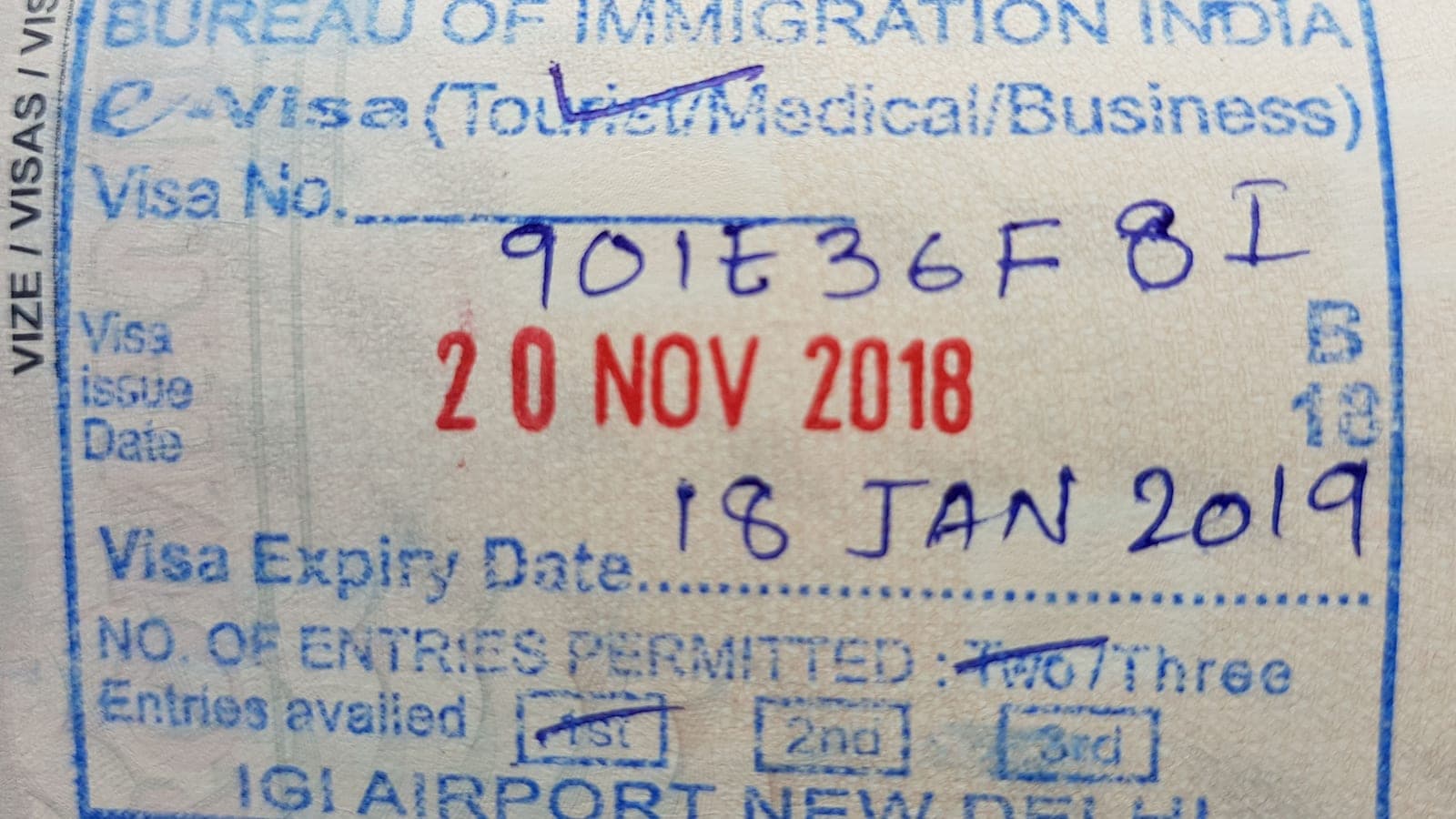
Photo: CrFilip98, Wikimedia Commons, CC BY-SA 4.0
Key Takeaways
- US passport, no OCI: you need an Indian visa. The e-Visa is the normal route: 30 days for US$25 (US$10 in April to June), one year for US$40 or five years for US$80, plus a 2.5 percent bank charge, applied for online at least four days before you fly (Consulate General of India, San Francisco).
- US passport with an OCI card: no visa. The OCI is a lifelong, multiple-entry visa, now issued digitally as the e-OCI; carry the card or the e-OCI with the passport it is linked to.
- Indian passport: no visa for India, but your US re-entry document is the one to check: a valid green card, or a valid US visa stamp with the approval notice or I-20 behind it. Indian citizens are exempt from the US six-month passport rule (U.S. Customs and Border Protection, December 2025).
- Everyone who is not an Indian citizen, OCI holders included, files India's online e-Arrival Card within 72 hours before landing and shows its QR code at immigration (Business Today, April 3, 2026).
- Pakistani passport holders and people of Pakistani origin cannot use the e-Visa and must apply for a regular visa at an Indian mission (Indian e-Visa portal).
Every week our desk books families where three passports sit around one dinner table: a US-born child, a parent who became a US citizen and holds an OCI card, and a grandparent on an Indian passport with a green card. Each needs a different document to enter India, and a different one to come home. This guide sets out, passport by passport, which Indian visa you need in 2026, what it costs, what changed this year, and the papers to carry in both directions.
Rules change with little notice. Everything here is as published by the Indian and US authorities at the end of October 2026, with the source linked, and we check the current rule for every traveller before ticketing.
Which India visa do you need? The quick answer by passport
| You hold | To enter India you need | To return to the USA you need |
|---|---|---|
| US passport, no OCI card | An e-Visa (30 days, 1 year or 5 years) or a regular visa | Your US passport book |
| US passport with an OCI card | Your OCI card or e-OCI, with the passport it is linked to | Your US passport book |
| Indian passport with a US green card | Nothing beyond the passport | Green card (Form I-551); a re-entry permit if away a year or more |
| Indian passport on H-1B, L-1, F-1, H-4 or another US visa | Nothing beyond the passport | A valid visa stamp in the passport, plus the approval notice (I-797) or signed I-20 |
| Canadian, British, Australian or EU passport living in the USA | An e-Visa (fees differ by nationality) or a regular visa | Whatever admits you to the USA today: green card, visa or visa waiver |
| Pakistani passport, or Pakistani origin on any passport | A regular visa from an Indian mission; no e-Visa | Your usual US document |
| A child on any passport | Their own passport and their own visa, e-Visa or OCI; nothing can be endorsed on a parent's passport | Their own passport and status |
The rest of this guide takes each row in turn.
India's e-Visa: types, validity and fees for US passport holders
The e-Visa is an electronic travel authorisation applied for and paid online at the government portal, indianvisaonline.gov.in. It is granted as a PDF you print and carry, and the visa itself is stamped into your passport on arrival at a designated airport or seaport. Nationals of about 175 countries and territories, the USA included, are eligible (Indian e-Visa portal).
| e-Visa type | Validity | Who it suits | Fee for US nationals |
|---|---|---|---|
| e-Tourist, 30 days | 30 days from arrival | One short family visit, a wedding, a pilgrimage | US$25, or US$10 for arrivals in April to June |
| e-Tourist, 1 year | 365 days from the date of grant, multiple entry, up to 180 days a year | A year with two or three trips | US$40 |
| e-Tourist, 5 years | 5 years from the date of grant, multiple entry, up to 180 days a year | Families who visit every year | US$80 |
| e-Business | 1 year, multiple entry, no single stay over 180 days | Meetings, trade, recruiting | Priced by nationality |
| e-Medical and e-Medical Attendant | Up to 1 year from arrival; two attendants per patient | Treatment at an Indian hospital and the relatives travelling with the patient | Priced by nationality |
| e-Conference | 30 days from arrival | A conference organised by a government or recognised body | Priced by nationality |
Fees for US nationals are from the Consulate General of India in San Francisco's e-Visa page, last updated October 27, 2026, which also sets the 2.5 percent bank charge and the rule that e-Tourist and e-Business applications be made at least four days before arrival (CGI San Francisco). Validity rules and the stay limit of 180 days per calendar year are from the portal itself.
What the portal's small print means in practice:
- Your passport must be valid for six months from arrival and have two blank pages. Airlines check this at check-in in the USA, and a passport that fails is not a refundable reason to miss a flight (CGI San Francisco, visa guidelines for US passport holders).
- Arrive at a designated airport. Every Indian city our USA to India routes land at, from Delhi and Mumbai to Kochi, Amritsar and Pune, is on the list. Check the current list of entry ports if you plan to enter India by land from Nepal or Bhutan on a side trip.
- The e-Visa cannot be extended or converted into another visa type in India, and it does not allow employment, journalism or NGO work.
- Each traveller applies separately. A child endorsed on a parent's passport is not eligible; the child needs a passport of their own.
- Pakistani passport holders and foreigners of Pakistani origin are not eligible, and holders of diplomatic or official passports apply through their mission instead.
Apply two to four weeks out rather than four days. Most approvals arrive within three working days, but the portal asks for a passport scan and a photograph that meet its specifications, and a rejected upload restarts the clock.
Regular (sticker) visas: when you need one instead
A regular visa is applied for through the Indian mission's outsourced application centre and pasted into the passport before you travel. US nationals most often need one when:
- You want a 10-year tourist visa. India restored its long-duration regular tourist visas for US nationals in March 2022; they allow stays of up to 180 days per calendar year (CGI San Francisco).
- You are the foreign spouse or dependent child of an Indian citizen or OCI holder and are not yet eligible for an OCI card yourself. The Entry (X) visa covers this, and it is also the visa for people of Indian origin who do not hold OCI (Consulate General of India, Dubai).
- You will work, study, intern, report or do research in India. Employment, student, journalist and research visas are regular visas; none of these activities is allowed on an e-Visa.
- You are of Pakistani origin, whatever passport you now hold.
Regular visa fees depend on the type, duration and your nationality, and the application centre adds a service charge and a small Indian Community Welfare Fund levy; the centre's fee page for your jurisdiction has the current table. Allow two to three weeks, longer for Entry (X) and employment visas, which can be referred to Delhi.
OCI cardholders: the lifelong visa, and what changed in 2026
The Overseas Citizen of India card is the document most Indian-American families travel on. It gives a multiple-entry, lifelong visa for visiting India for any purpose, and exempts you from registering with the Foreigners Regional Registration Officer for any length of stay (Consulate General of India, Birmingham). You still need prior permission for research, missionary or Tabligh activities, mountaineering, journalism, an internship or job with a foreign mission in India, and visits to protected or restricted areas (CGI Birmingham).
Three things to know for a 2026 trip:
- The card went digital. The Ministry of Home Affairs launched the e-OCI on June 30, 2026; new applicants from July 8, 2026 receive the digital card only, and existing printed booklets remain valid (EY tax alert, July 7, 2026). Our e-OCI and e-Arrival Card guide walks through downloading it and updating a renewed passport. For this winter we still recommend carrying the booklet as well as the phone: airline agents in the USA are learning the new credential.
- Carry the passport the OCI is linked to. Immigration matches the OCI to a passport number. If you have renewed your US passport, update the details on the OCI portal and carry the old passport too until it is done.
- The OCI replaces a visa, not the e-Arrival Card. OCI holders are foreign nationals in Indian law and file the e-Arrival Card like everyone else (see below).
One rule catches newly naturalised citizens: Indian law does not permit dual citizenship, so an Indian passport must be surrendered to the consulate once you acquire US citizenship, and travelling to India on it afterwards attracts a penalty (CGI San Francisco). The consulate cancels the passport and issues a renunciation certificate, which you need before applying for the OCI; you do not have to carry the certificate when you travel (CGI San Francisco, renunciation FAQ).
Indian citizens: no visa for India, but the US side matters
An Indian passport needs no visa for India and no e-Arrival Card. The documents that matter are the ones that get you back into the United States, and they differ by status.
Green card holders. Carry the physical card; a photocopy is not accepted. An absence of a year or more is the usual trigger for a finding that you have abandoned residence, and six months or more can break the continuous residence needed for naturalisation, so a long stay with parents needs planning. If you expect to be away a year or more, apply for a re-entry permit on Form I-131 before you leave the USA; it is valid for up to two years and lets you return without a returning-resident visa, though it does not guarantee admission (U.S. Citizenship and Immigration Services).
H-1B, L-1, F-1, J-1 and dependants. You can enter India on an expired US visa stamp, but you cannot return without a valid one. Two 2025 changes matter if yours needs renewing in India:
- The State Department now says applicants should schedule the visa interview in their country of nationality or residence, so an Indian national living in the USA applies in India, not at a third-country post on the way home (NAFSA, summarising the Department of State notice of September 6, 2025).
- The interview waiver, known as dropbox, has been narrowed to a small group of same-category renewals, and the automatic waiver for children under 14 and adults over 79 has gone, so most applicants now need an in-person appointment and the waits at Indian posts run to months (Berardi Immigration Law, July 2026). Book the appointment before you book a non-refundable fare.
Carry the approval notice (Form I-797) and recent pay stubs or an employment letter with an H-1B or L-1 stamp. Students carry the Form I-20 with a travel signature less than a year old, or less than six months old on OPT, plus the EAD card if on OPT (University of Texas at Austin, International Student and Scholar Services).
Pending green card applications. If you have applied to adjust status and leave without advance parole, USCIS will treat the application as abandoned unless you hold certain nonimmigrant statuses, and you may not be allowed back in (USCIS, travel documents). Get the parole document in hand before buying a ticket.
Passport validity. The USA normally wants a passport valid for six months beyond your stay, but India is on the list of countries exempt from that rule, so an Indian passport needs only to be valid for the period of your stay. Canada, the United Kingdom and Australia are on the same list (CBP, Six-Month Passport Validity Update, December 2025). Airlines and consulates can still apply a six-month rule of their own, and a passport with under six months left makes every other application harder, so renew early.
Other nationalities travelling from the USA
- Canada, the United Kingdom, Australia and the EU. All are e-Visa eligible, with the same types and validity as US nationals but fees set by nationality; the portal's fee table lists them, and British passport holders pay noticeably more for the five-year visa. Everything else in the e-Visa section applies.
- Pakistan. Pakistani passport holders, and people of Pakistani origin holding any passport, apply for a regular visa at an Indian mission; the application is referred for clearance and takes weeks, not days (Indian e-Visa portal).
- Afghanistan, Bangladesh and others with special procedures. Some nationalities use a dedicated portal or need a regular visa; the e-Visa portal's eligibility list is the place to check before you plan.
- Green card holders of any nationality carry the green card for the US side and apply for the Indian visa on their own passport, under their own nationality's rules.
For the return to the USA, your Indian visa is irrelevant; what counts is your US status document, whether that is a green card, a visa stamp, or admission under the visa waiver programme with an ESTA.
The e-Arrival Card and other arrival formalities
e-Arrival Card. Every foreign national, OCI cardholders included, completes India's online e-Arrival Card within 72 hours before landing and shows the QR code at immigration. The paper disembarkation form was withdrawn on April 1, 2026 after a transition that began in October 2025, and Indian passport holders are exempt (Business Today, April 3, 2026; Consulate General of India, San Francisco). It is free, takes five minutes, needs your flight number and address in India, and is one form per traveller, so a family of four files four.
Customs. India's Baggage Rules, 2026, in force since February 2, 2026, raised the duty-free allowance for passengers arriving by air to ₹75,000 of goods, and to ₹25,000 for foreign tourists; one new laptop remains duty-free, and declarations can be filed electronically before arrival (SCC Online). Foreign currency must be declared if the notes exceed US$5,000 or the total exceeds US$10,000. Our USA to India flights guide covers gold and gift limits.
Health documents. Travellers aged nine months and over who arrive from or have transited a yellow-fever-endemic country need a yellow fever vaccination certificate, valid from ten days after the jab, or face quarantine of up to six days (Ministry of Health and Family Welfare, International Health). This affects itineraries through Africa or South America, not the Gulf and European connections most of our customers fly.
Transit through India and on the way to it
- Connecting through an Indian airport to a third country without leaving the international transit area is generally visa-free; if you leave the airport, stay overnight in a city hotel or change to a domestic flight, you need a visa. A transit visa is valid for 15 days and allows a stay of up to 72 hours (Embassy of India, Helsinki); most travellers find an e-Tourist visa simpler.
- Indian passport holders connecting in Europe: France dropped its airport transit visa requirement for Indian nationals on April 10, 2026 and Germany on June 3, 2026 (Outlook Traveller). London still requires a direct airside transit visa unless you hold a document that exempts you, such as a valid US visa or green card (GOV.UK). Gulf hubs need no visa for an airside connection.
- US passport holders need no transit visa at any of the hubs on the USA to India corridor.
Documents to carry when you fly to India
Carry these in your hand luggage, not in the checked bag, and keep a photo of each on your phone:
- Passport valid six months beyond arrival with two blank pages, plus the old passport if your OCI or Indian visa is linked to it.
- Your India entry document: printed e-Visa approval, the regular visa in the passport, or the OCI card and e-OCI.
- e-Arrival Card QR code, filed within 72 hours of landing, one per traveller.
- Return or onward ticket and the address and phone number of where you are staying, which the e-Arrival Card and the immigration officer both ask for.
- Your US re-entry document for the way back (next section), because you will not be able to get it in India.
- Prescriptions for any medicine you carry, in original packaging, and a doctor's letter for anything injectable or controlled.
- Travel insurance details, and the airline's baggage line printed on the e-ticket so an allowance dispute at the counter is settled in seconds. Our baggage guide explains what each airline includes.
- For children: their own passport and visa or OCI, a birth certificate copy, and a consent letter if one parent is travelling (see below).
- Yellow fever certificate only if your routing touches an endemic country.
Documents to carry when you fly back to the USA
| Your status | Carry |
|---|---|
| US citizen | US passport book; the passport card and trusted-traveller cards are not accepted for air travel (CBP, Know Before You Go). Global Entry or Mobile Passport Control speeds the arrival hall. |
| Green card holder | The physical green card and your passport; the re-entry permit if you have been away a year or more; evidence of US ties (lease, job, tax return) if the trip ran past six months |
| H-1B or L-1 and dependants | Passport with a valid visa stamp, the I-797 approval notice, recent pay stubs or an employment letter; dependants carry the principal's documents and the marriage or birth certificate |
| F-1 student | Passport with a valid visa stamp, the I-20 with a travel signature under a year old (six months on OPT), proof of enrolment, and the EAD card if on OPT |
| Pending adjustment of status | The advance parole document, your passport and the receipt notices |
| Visitor on a B-2 visa (visiting parents) | Passport with the visa, evidence of ties to India and funds for the stay; the visa does not fix the length of stay, the officer does |
Since December 26, 2025, Customs and Border Protection may photograph most non-citizens at departure as well as arrival under its biometric exit rule; it adds no time at the gate, and US citizens can ask for manual processing (Berardi Immigration Law). Declare all food on the customs declaration: sealed, labelled spices and sweets are normally allowed, fresh produce and meat are not.
Travelling with children, with parents, and on someone else's behalf
- Children need their own documents. Every child needs a passport of their own, and their own visa, e-Visa or OCI card. A US-born child of Indian parents is a US citizen and needs an e-Visa or an OCI; the OCI is the better long-term buy for a family that visits every year.
- One parent travelling with a child. No US law requires it, but Customs and Border Protection's guidance for travellers says that when a child is accompanied by only one parent, the adult should carry a notarised note from the other parent, and a note signed by both parents when the child travels with grandparents or other relatives (CBP, Welcome to the United States guide). Airlines in India ask for it more often than CBP does. A sole-custody parent should carry the court order instead.
- Elderly parents on Indian passports. The green card or B-2 visa rules above apply, and the six-month and one-year clocks are the ones families forget. Our guide to flying parents between India and the USA covers wheelchair requests, meals and transit rules at each hub.
- Booking for someone else. Immigration documents are the traveller's own; a travel agency can tell you what is required and check the expiry dates, but cannot obtain a visa, OCI or advance parole on your behalf. We do check every traveller's passport validity and visa type against the itinerary before ticketing.
Common mistakes we see at the desk
- Booking the ticket before the visa. An e-Visa is quick but not instant, and a rejected photo or scan restarts it. Apply first, or at least buy a changeable fare.
- Assuming the OCI covers everything. It covers the visa, not the e-Arrival Card, and it must be linked to the passport you fly on.
- A US visa stamp that expired while you were in the USA. Fine for living there, useless for coming back. Check the stamp, not just the I-797, before you book a trip to India.
- Six months of passport validity. India needs it on arrival. A passport that expires in May will not board a January flight to India.
- Travelling on an Indian passport after taking US citizenship. It is an offence and attracts a penalty at the Indian end. Surrender the passport, obtain the renunciation certificate, apply for the OCI.
- One form for the family. The e-Arrival Card is one per traveller, infants included.
Frequently Asked Questions
Do US citizens need a visa to visit India?
Yes, unless they hold an OCI card. The e-Visa is the usual route: 30 days, one year or five years, applied for online at least four days before travel. The fees for US nationals are US$25 (US$10 in April to June), US$40 and US$80 respectively, plus a 2.5 percent bank charge.
How long before my trip should I apply for an Indian e-Visa?
The portal accepts applications a minimum of four days before arrival, and most decisions arrive within three working days. We suggest two to four weeks, because a photograph or passport scan that fails the portal's checks has to be uploaded again.
Do OCI cardholders need a visa or an e-Arrival Card for India?
No visa: the OCI card is a lifelong, multiple-entry visa. Yes to the e-Arrival Card: OCI holders are foreign nationals and must file it within 72 hours before landing, like every other non-Indian passport holder.
Can my child travel to India on my passport or my OCI card?
No. Every traveller, infants included, needs their own passport and their own e-Visa, visa or OCI card. A US-born child needs an e-Visa or an OCI of their own.
Can a green card holder stay in India for a year?
Not without planning. An absence of a year or more is the usual basis for finding that permanent residence has been abandoned, and six months or more can break the residence needed for naturalisation. Apply for a re-entry permit on Form I-131 before leaving if the stay may reach a year.
I am on an H-1B visa and my stamp has expired. Can I visit India?
You can enter India, but you cannot return to the USA without a new visa stamp. Applications should now be made in your country of nationality or residence, most applicants need an in-person interview, and appointment waits at Indian posts run to months, so secure the appointment before booking a non-refundable fare.
What happens if I forget the e-Arrival Card?
You can file it on your phone at the airport before reaching the immigration counter, but the queue is the price. File it the day before you fly and save a screenshot of the QR code.
Continue Learning
- e-OCI, e-Arrival Card and your passport: India entry paperwork for US passport holders
- USA to India flights: nonstop routes, baggage rules and visa guide
- Flying parents between India and the USA: a practical guide
- USA to India baggage allowance by airline
- Flights from the USA to India, city by city
- Talk to a travel expert
About the author: Srikanth Borra is the founder of Voldeluxe Travels. He grew up in Hyderabad, lives in Dallas, and has spent nine years booking long-haul itineraries across 600+ airline partners for families, students, corporate accounts and pilgrimage groups departing the USA.
Published October 30, 2026. This guide describes Indian and US government requirements as published at the time of writing, with sources linked, and is not legal or immigration advice. Visa fees, eligibility and entry rules change with little notice; confirm them on the official Indian e-Visa portal, the Indian mission for your state and the US agencies before you travel.
Ready to price your trip?
Tell an expert your dates and party size. We compare consolidator and published fares across 600 airlines and reply the same business day.
Search flights and stays