Flying Internationally with Family from the USA: A Parent's Guide to Long-Haul Flights
A practical, source-checked guide to flying internationally with kids from the USA — seating rules, TSA screening, passports for minors, lap-infant fares, and long-haul tips for families.

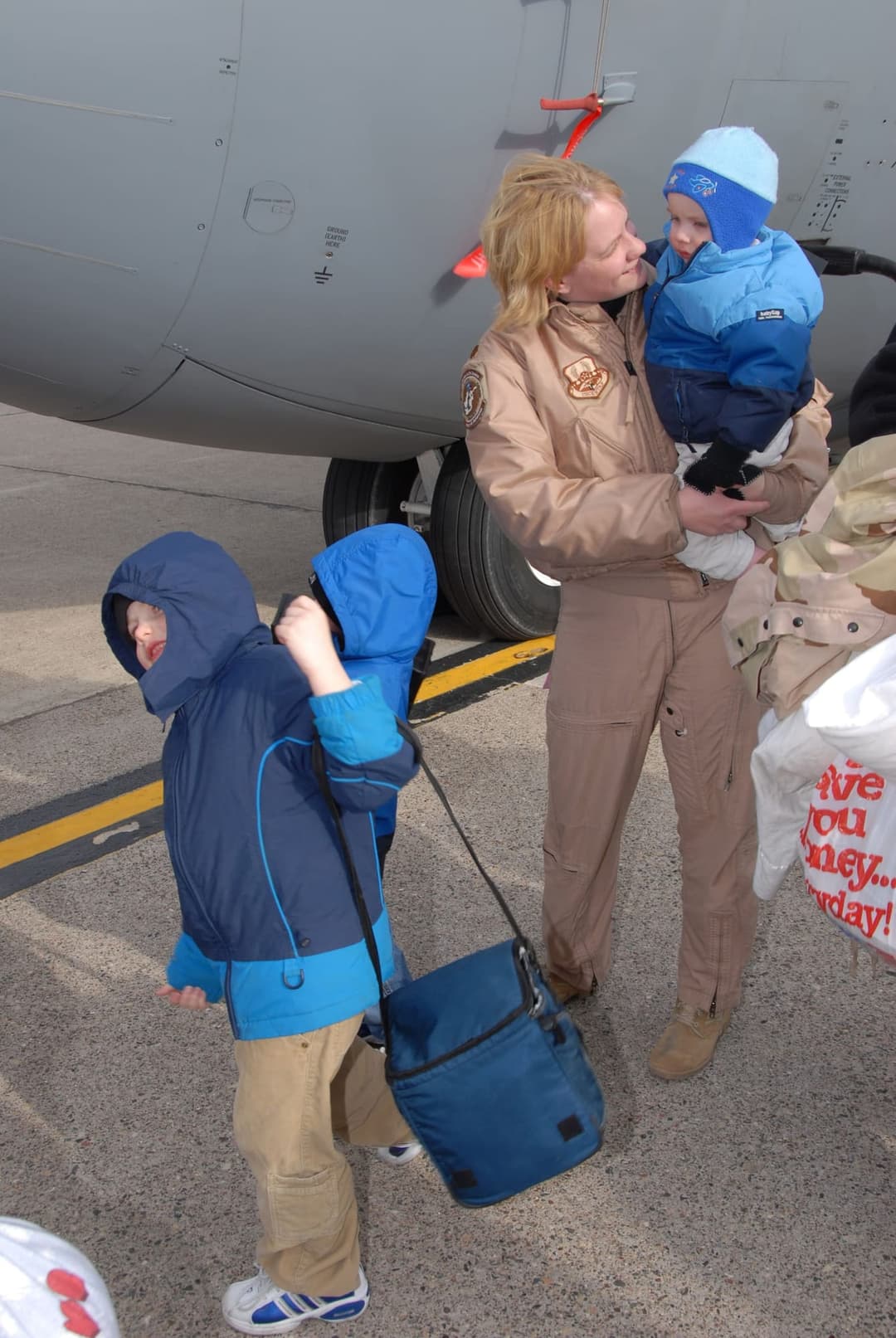
Photo: Ildar Sagdejev, Wikimedia Commons, CC BY-SA / GFDL
Flying Internationally with Family from the USA: A Parent's Guide to Long-Haul Flights
 Watching planes before a flight. Photo: Ildar Sagdejev, Wikimedia Commons.
Key Takeaways
- Airlines are not currently required to seat families together for free. The Department of Transportation proposed this rule in August 2024, but as of September 2026 it has not been finalized — plan your seating at booking, not around a rule that isn't yet law (DOT/Federal Register).
- TSA gives children 12 and under modified screening (shoes and light jackets can stay on) and automatic PreCheck lane access with an enrolled parent — but kids 13–17 need the PreCheck indicator on their own boarding pass (TSA.gov).
- A lap infant (under 2) typically flies free domestically but costs around 10% of the adult fare plus taxes on international itineraries, and one adult may hold only one lap infant under FAA rules (Delta Air Lines infant travel policy).
- Passports for children under 16 are valid for only 5 years, not 10, and can't be renewed by mail — plan renewal timing accordingly (U.S. Department of State).
- If only one parent is traveling internationally with a child, carry a notarized consent letter from the other parent — the US doesn't require it, but many destination countries do (U.S. Department of State).
Flying internationally with kids from the USA comes with more real, checkable rules than most "flying with kids" articles cover — and at least one rule that gets reported as settled when it isn't. This guide sticks to what's verifiable right now: current TSA screening policy, the actual status of the federal family-seating rule, passport requirements for minors, lap-infant fare rules, and what pediatric guidance says about flying with a baby. It's written from the desk that books families onto long-haul routes every week at Voldeluxe, where seats are held in one row wherever the cabin allows and under-2s fly free on the fares we track.
Is Airline Family Seating Actually Required by Law?
No — not yet. In August 2024, the Department of Transportation proposed a rule (NPRM, Docket DOT-OST-2024-0091) that would require airlines to seat children 13 and under next to an accompanying adult free of charge, within 48 hours of booking, when adjacent seats exist, with limited exceptions and per-child penalties for violations. As of today, the rule has not been finalized, and the current administration has taken no public action to move it forward (DOT/Federal Register, proposed Aug 2024).
What that means for you: don't assume an airline will seat your family together automatically just because you've heard "family seating is now the law." Until the rule is finalized, it isn't. Request family seating specifically at the time of booking, check your seat map before departure, and if you're booking through an agency, ask what happens if the airline splits your group anyway — Voldeluxe refunds seat-selection fees and rebooks the row on the return leg if that happens on the outbound.
See how Voldeluxe books family seating in practice for larger family groups and multi-generational trips.
TSA Rules for Traveling with Kids: What Actually Changes by Age
TSA applies different screening rules depending on how old your child looks, not a fixed birth-certificate check at the checkpoint — officers use "appears to be 12 years old and younger" as the practical threshold (TSA.gov).
| Rule | Children 12 and under | Children 13–17 |
|---|---|---|
| Shoes and light jackets | Can stay on during screening | Standard screening applies (shoes/jackets off) |
| TSA PreCheck lane | Automatic with an enrolled parent/guardian, no indicator needed on the child's own boarding pass | Must have the TSA PreCheck indicator on their own boarding pass, same reservation |
| ID requirement | None required domestically | None required domestically |
Source: TSA.gov, "Traveling with Children" and TSA PreCheck for Families.
A few practical details that catch families off guard at the checkpoint:
- Strollers, car seats, and booster seats go through the X-ray belt — but your child has to come out and walk through the metal detector by hand; a car seat or stroller cannot carry a child through the X-ray (TSA.gov).
- Breast milk, formula, and baby food are exempt from the standard 3.4 oz liquid rule, but you need to declare them to the officer for separate screening — don't just place them in your quart bag and hope no one notices (TSA.gov).
- The PreCheck age cutoff is the detail most families get wrong. A 12-year-old rides through PreCheck free with an enrolled parent. A 13-year-old needs their own indicator printed on the same reservation — if you didn't add them correctly when booking, they'll get pulled into standard screening even if the rest of the family breezes through.
Passports and Consent Letters: The Part Most Guides Skip
A child's passport is not a smaller version of an adult one — it expires faster and can't be renewed the easy way. Passports issued to travelers under 16 are valid for only 5 years, compared to 10 years for adults, and unlike an adult renewal, a minor's passport cannot be renewed by mail — it requires a new in-person application every time, generally with both parents or guardians appearing in person unless one submits a notarized Form DS-3053 consent statement (U.S. Department of State/USAGov).
The other detail that trips up single parents, divorced or separated parents, and grandparents traveling with grandkids: the United States does not legally require proof of both parents' permission for a child to travel internationally, but many destination countries do. The State Department's own guidance recommends carrying a notarized letter from the non-traveling parent whenever a child travels abroad with only one parent or guardian (U.S. Department of State, via USAGov). Check your specific destination's entry rules before you fly — this is a document that's far easier to get notarized at home than to explain at a foreign immigration desk.
Timing tip: current passport processing for adults runs roughly 4–6 weeks routine or 2–3 weeks expedited, plus mailing time each way — and because a minor's passport can't be renewed by mail, budget for an in-person appointment on top of that (travel.state.gov). With record numbers of Americans applying for passports right now, book that appointment as soon as you know your travel dates — don't wait until the trip is fully planned.
Flying with an Infant: Lap-Infant Rules and What Pediatricians Actually Recommend
Under FAA safety rules, one adult may hold only one lap infant (a child under 2) on their lap — a second infant traveling with the same adult requires its own purchased seat. On international itineraries, a lap infant is typically charged around 10% of the adult fare plus taxes and fees, which is a meaningful difference from the "infants under 2 fly free" advice you'll see repeated everywhere — that's a domestic norm on many carriers, not a universal international one (Delta Air Lines, infant travel policy).
On whether to hold your baby or buy them a seat, the American Academy of Pediatrics is direct: it recommends a purchased seat with an FAA-approved child restraint over lap-holding, because turbulence — not takeoff or landing — is the leading cause of injury to children on aircraft (AAP, HealthyChildren.org). If you do bring a car seat onboard, check that it carries a label reading "This restraint is certified for use in motor vehicles and aircraft" — that's the FAA-approval marker gate agents and flight attendants look for (AAP, HealthyChildren.org). The AAP's general guidance is to wait until a baby is at least 2–3 months old before flying, with 7 days as the outer minimum most pediatricians consider (AAP, HealthyChildren.org) — talk to your own pediatrician about your specific baby before booking a very early trip.
 Public domain, U.S. government work, via Wikimedia Commons.
Baggage: What's Actually Included for Families on International Fares
Checked-baggage rules vary by carrier and cabin, and it's worth confirming your specific fare's allowance rather than assuming — but many international economy fares from major US carriers include at least one free checked bag per traveler, with premium cabins typically getting two. Confirm your exact allowance directly with the airline or your booking agent before you pack, since baggage policy is one of the more frequently updated parts of any fare. Regardless of checked-bag allowance, strollers and car seats travel free as gate-checked items on every partner airline Voldeluxe books — pack light in the cabin and let the stroller do the work through the terminal until you're at the gate. If you're still comparing routes, search family-seating-friendly fares across 600 airlines before you lock a departure date.
Long-Haul Flying with Kids: What Actually Helps
 Photo: Unsplash (free to use under the Unsplash License).
Beyond the paperwork, long-haul flights (think 8+ hours) reward a few specific choices over generic "bring snacks" advice:
- Book the bulkhead or a bassinet-eligible row for infants if the airline offers one on your aircraft type — not every wide-body does, so confirm at booking, not at the gate.
- Choose premium economy over economy if the budget allows it on a long overnight leg — the extra recline matters more for a child trying to actually sleep than for an adult who can nap upright. Our complete guide to booking international flights covers the economy-vs-premium-economy trade-off in more depth.
- Time the flight to overlap with your child's normal sleep window where schedules allow, rather than optimizing purely for the cheapest departure time.
- Pre-load entertainment offline — long-haul wifi is inconsistent, and a device with downloaded content beats hoping the seatback screen or cabin wifi cooperates for 10+ hours.
See our cabin-class comparison for long-haul flights for how economy, premium economy, and business trade off on an overnight leg.
Common Mistakes Families Make Booking International Flights
- Assuming family seating is legally guaranteed. It isn't yet — the DOT rule remains proposed, not final, as of this article's publish date (DOT/Federal Register).
- Not declaring breast milk, formula, or baby food at the TSA checkpoint, which can slow down screening unnecessarily.
- Booking a teen's PreCheck without the indicator on their own boarding pass, which pulls them into standard screening even if the rest of the family has PreCheck.
- Renewing a child's passport by mail — it isn't an option; budget time for an in-person appointment.
- Traveling internationally as a solo parent without a notarized consent letter, which some destination countries require even though the US doesn't.
- Holding two infants on one adult's lap. FAA rules allow only one lap infant per adult; a second infant needs a purchased seat.
Frequently Asked Questions
Are airlines required to seat families together for free?
Not yet. The Department of Transportation proposed this requirement in August 2024, but as of September 2026 the rule has not been finalized, so airlines are not currently legally obligated to seat families together at no charge (DOT/Federal Register). Request family seating specifically when you book.
Do infants fly free on international flights?
Not automatically. A lap infant under 2 typically flies free on domestic US flights, but on international itineraries most carriers charge roughly 10% of the adult fare plus taxes and fees for a lap infant (Delta Air Lines).
How long is a child's passport valid?
Five years for travelers under 16, compared to 10 years for adults — and a minor's passport must be renewed with a new in-person application each time; mail-in renewal isn't available for children (U.S. Department of State/USAGov).
Can one parent travel internationally alone with their child?
The United States doesn't legally require the other parent's written permission, but many destination countries do, and the State Department recommends carrying a notarized consent letter from the non-traveling parent regardless of the destination's specific rule (U.S. Department of State/USAGov).
What TSA screening rules apply to kids?
Children who appear 12 or under get modified screening (shoes and light jackets can stay on) and automatic TSA PreCheck lane access with an enrolled parent. Children 13–17 need the PreCheck indicator printed on their own boarding pass to get expedited screening (TSA.gov).
Should I buy my baby their own seat instead of holding them on my lap?
The American Academy of Pediatrics recommends a purchased seat with an FAA-approved child restraint over lap-holding, since turbulence — not takeoff or landing — is the leading cause of in-flight injury to children (AAP, HealthyChildren.org).
Continue Learning
- How to book international flights from the USA in 2026: the complete guide
- Best time to book international flights from the USA
- Talk to a family travel specialist
- Ask a question before you book
- Questions travelers ask
About the author: Srikanth Borra is a Senior International Travel Consultant at Voldeluxe with nine years of experience booking long-haul itineraries across 600+ airline partners for families, students, corporate accounts, and pilgrimage groups departing the USA.
Published September 13, 2026. This guide reflects TSA, DOT, State Department, and AAP guidance as verified on its publish date; airline-specific baggage and infant-fare policies change, so confirm current terms directly with your carrier or booking agent before you fly.
Ready to price your trip?
Tell an expert your dates and party size. We compare consolidator and published fares across 600 airlines and confirm same day.
Search flights and stays