Best Time to Book International Flights from the USA: What 2026 Fare Data Shows
New 2026 industry fare data and IATA figures reveal the real booking windows for international flights from the USA by region, and why 2026's fuel-price shock changes the math.
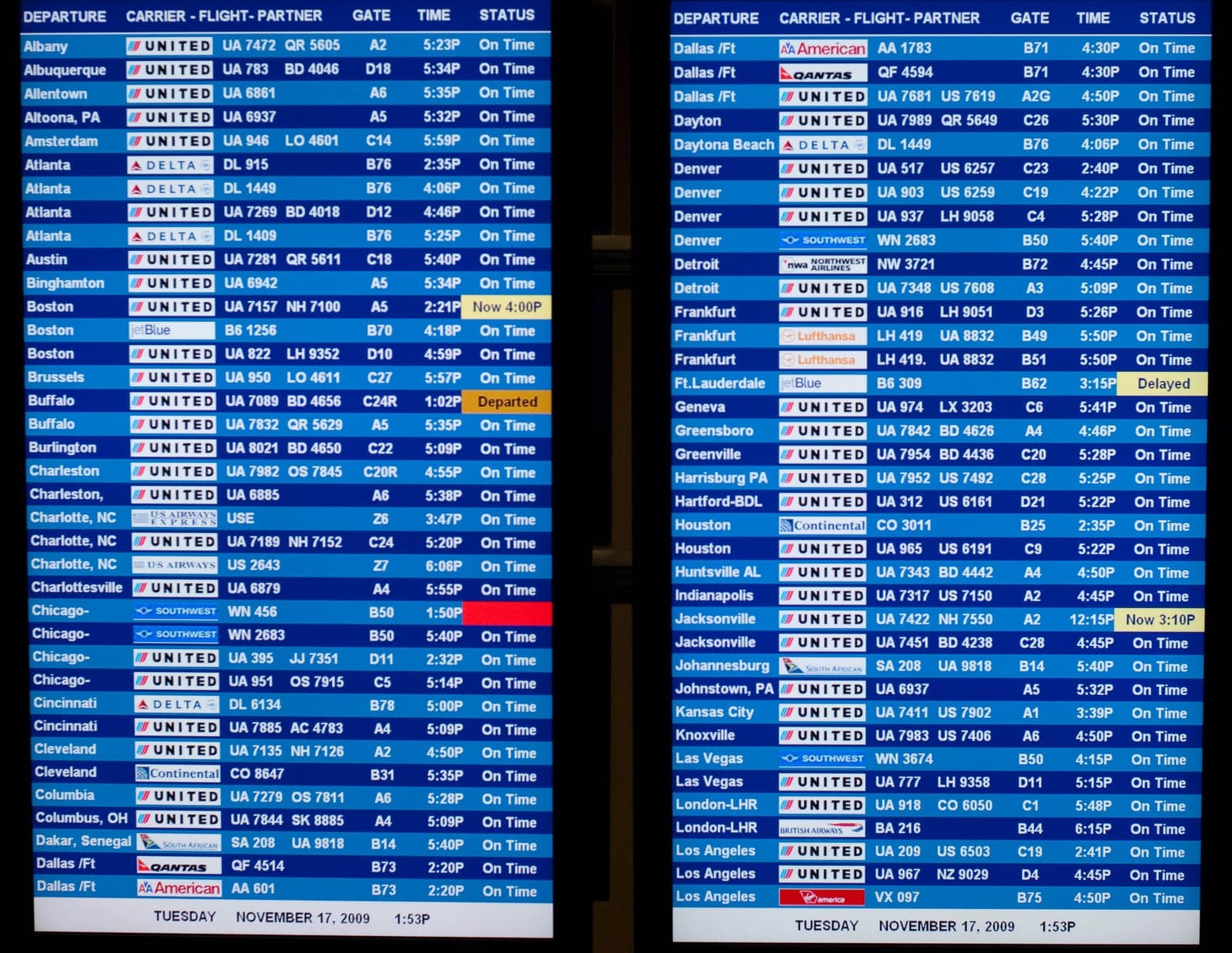
Photo: paul_houle, Wikimedia Commons, CC BY-SA 2.0
Best Time to Book International Flights from the USA: What 2026 Fare Data Shows
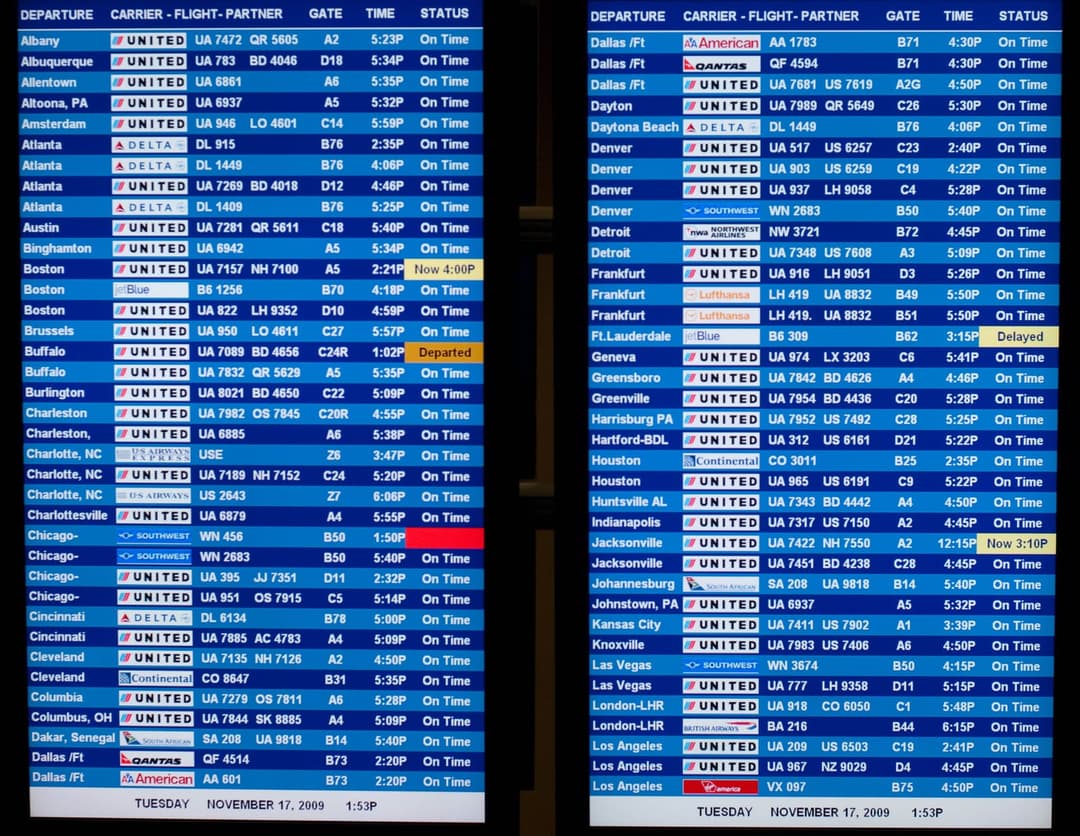 Departure board at Washington Dulles International Airport. Photo: paul_houle, Wikimedia Commons (CC BY-SA 2.0).
Key Takeaways
- There's no single "best time to book" — the optimal window ranges from 66 days out for Canada to 207 days out for the Caribbean, per a 917-million-fare 2026 industry study of over 1 million international trips.
- Friday is now the cheapest day both to book and to fly internationally, up to 8% cheaper than a Sunday departure — a reversal of the old "book on Tuesday" advice (2026 industry booking-pattern data).
- 2026's fuel-price shock is the story generic booking advice misses: global airline profit margins are projected to roughly halve in 2026 as jet fuel costs climb, which can override normal seasonal booking patterns on affected routes (IATA).
- Long-run, international fares are still historically cheap: average return airfares in 2025 were roughly 34.7% below 2015 levels in real terms, even before this year's fuel spike (IATA economic reporting).
- A licensed agency can access unpublished consolidator fares that a public search engine won't surface, which matters most on the long-haul, high-fare corridors where timing alone won't get you the lowest price.
"Book two to three months ahead" is the advice you'll find on almost every generic flight-timing article. It's also wrong for at least half of international routes from the USA — and, in a year when jet fuel prices have jumped roughly 81% since February, it may be the least useful piece of advice you could follow in 2026. This guide works through what the actual 2026 fare data says, region by region, day by day, and why this year's fuel-driven volatility means timing strategy alone can't do all the work anymore.
The Booking Window Actually Depends on Where You're Flying
International booking windows vary by a factor of more than three depending on the region — treating "international" as one category, the way most advice does, throws away the most useful part of the data. A large-scale 2026 industry airfare-timing study, built from 917 million airfares and more than 1 million international trips across 3,000+ global markets, found the cheapest booking window ranges from 66 days out for flights to Canada to 207 days out for the Caribbean (2026 Annual Airfare Study, Feb 2025).
The same study found average fares climb with the booking window, too — flights to Canada averaged $427 round-trip, while South Pacific routes averaged $1,708 and Caribbean routes averaged $545, reflecting both distance and how far ahead demand builds on each corridor (2026 Annual Airfare Study, Feb 2025).
What this means in practice: if you're flying USA to India or the wider Asia region — including Japan and the Philippines — the data points to roughly a four-month booking window as the historical sweet spot — though as we cover below, 2026's fuel market adds a live variable that pure historical timing can't account for. For USA to Europe routes, the window runs closer to five to six months. Caribbean and South Pacific trips reward booking earliest of all.
Day of the Week Matters, But Less Than You Think — And the "Best Day" Has Changed
Friday is now the cheapest day to both book and fly an international ticket, reversing years of "book on a Tuesday afternoon" folklore. A 2026 industry booking-pattern report — built from a full year of fare-deal tracking data, covering fares at least 20% below standard rates — found Friday bookings run up to 3% cheaper than Sunday, and Friday departures run up to 8% cheaper than Sunday internationally. For US domestic flights specifically, Tuesday departures were 14% cheaper than Sunday (2026 industry data, Jun 2026).
A separate independent analysis, covering searches from January 2025 through March 2026, largely agrees on the departure side — Wednesday came out as the cheapest international departure day — but found no statistically meaningful pattern for which day of the week you book on (2026 flight-search data, updated Mar 2026). The honest read: day of the week can shave a few percent off a fare, but it's a rounding error next to region, season, and — in 2026 specifically — the fuel market.
Note on "urban legend" claims: you'll see older advice online citing a specific "airlines reprice 200 times a day, always check Tuesday at 3pm" rule. We could not trace that claim to a verifiable primary source, and it doesn't appear in any of the studies cited above — treat it as internet folklore, not fare strategy.
Why 2026 Is Different: The Fuel-Price Variable No Generic Guide Accounts For
Timing advice built on historical data assumes a stable fuel market, and 2026 hasn't had one. IATA's mid-year outlook projects jet fuel averaging $152 a barrel in 2026, up from $90 in 2025 — a roughly 70% jump that's pushing the global airline industry's fuel bill from $252 billion to $350 billion and cutting the industry's net profit margin from 4.2% to a projected 2.0% (IATA, Jun 2026).
That matters for booking strategy because airlines under margin pressure don't discount as predictably as historical booking-curve data assumes. On the corridors most exposed to the disruption — routes crossing the Middle East and connecting through Gulf hubs in particular — the old "book at day 120" rule can undershoot badly if capacity gets cut mid-booking-window. This is exactly the kind of route-specific read that a real fare index, not a static rule of thumb, is built for: see Voldeluxe's live fare index for how Middle East and Asia routes are moving right now.
Zoom out, though, and international flying is still historically affordable. Even accounting for 2026's spike, average real return airfares were roughly 34.7% below 2015 levels in 2025, part of a decade-long deflationary trend in global airfares that predates this year's disruption (IATA economic reporting, Dec 2025 / Jun 2026). The 2026 fuel shock is a real, current headwind — but it's a spike on top of a much cheaper long-run baseline, not a return to 2015-era pricing.
What About Consolidator and Agency Fares?
Consolidator ("net") fares are typically only available on international itineraries, and the timing dynamic is different from a published fare: net fares are often cheapest relative to published fares several months before departure, then the published fare can become competitive again close to departure if the flight is selling well (travel-industry trade resource). In practice, that means the "book early" rule applies even more strongly if you're trying to access a consolidator rate — and it's a rate you generally can't see or compare yourself on a public search engine, since it's sold only through accredited agencies.
This is where fare-timing research and agency access work together rather than as alternatives: knowing the historical booking window tells you when to start looking; having someone compare the published fare against an unpublished net fare on the same dates tells you whether the "right time" fare is actually the best fare available that day.
Frequently Asked Questions
What is the single best time to book an international flight from the USA?
There isn't one universal answer — it depends on region. A 2026 industry study found the optimal window ranges from 66 days out for Canada to 207 days out for the Caribbean, with Europe (160 days) and Asia (120 days) in between (2026 Annual Airfare Study, Feb 2025).
Is Tuesday still the cheapest day to book a flight?
No — that advice is outdated for 2026. 2026 industry booking-pattern data found Friday is now the cheapest day to book internationally, up to 3% cheaper than Sunday, while a separate independent analysis found no statistically meaningful booking-day pattern at all (2026 industry data).
Why are international flights more expensive in 2026?
A conflict-driven Strait of Hormuz disruption beginning in February 2026 pushed jet fuel prices up roughly 81% and crude oil 64%, squeezing airline margins and driving fare increases, most severely on routes crossing the Middle East and connecting through affected hubs (Oxford Economics, Apr 2026).
Are consolidator fares actually cheaper than booking directly with an airline?
They can be, particularly on long-haul international and premium-cabin tickets, with potential savings reported up to 70% on some routes — though the size of any discount varies by route and season, and consolidator fares are unpublished, so you need an accredited agency to access and compare them (travel-industry trade coverage, 2025–2026).
Should I wait for a fare to drop, or book now?
If you're inside the optimal booking window for your region and the fare matches or beats the seasonal average for that route, booking is generally the lower-risk choice — international fares don't reliably keep falling the closer you get to departure, and in a volatile fuel year like 2026, waiting can just as easily mean paying more. A route-specific fare check against current fare-index data is more reliable than a blanket "wait" or "book now" rule.
Continue Learning
- How to book international flights from the USA in 2026: the complete guide
- Flying internationally with family from the USA: a parent's guide
- Live fare index: USA to the world
- Talk to a travel expert
About the author: Srikanth Borra is a Senior International Travel Consultant at Voldeluxe with nine years of experience booking long-haul itineraries across 600+ airline partners for families, students, corporate accounts, and pilgrimage groups departing the USA, with particular focus on fare-class strategy and multi-passenger group bookings.
Published September 13, 2026. Fare figures cited are historical study averages, not live quotes; check Voldeluxe's live fare index for current pricing on your route.
Ready to price your trip?
Tell an expert your dates and party size. We compare consolidator and published fares across 600 airlines and confirm same day.
Search flights and stays